The North Atlantic Treaty Organization

The Spin
Pro-establishment narrative
Collective defense remains the safest foundation for Europe. Russia's war has proved that borders, alliances and military readiness still decide whether smaller states survive coercion. NATO works because it turns an attack on one member into a problem for all members, which raises the cost of aggression before it starts. The alliance needs more European spending and less dependence on Washington, but weakening NATO rewards the exact behavior it was built to deter.
Establishment-critical narrative
NATO expansion helped create the insecurity it now claims to manage. Moving a U.S.-led military alliance toward Russia's borders predictably fed confrontation, empowered hardliners and narrowed the space for diplomacy. That does not excuse invasion or deny Eastern Europe's agency, but it exposes the recklessness of treating enlargement as cost-free. Washington's foreign policy class confused victory in the Cold War with permission to redesign Europe around American primacy.
Pro-Trump narrative
NATO has become a bad bargain for the United States when wealthy European states rely on American guarantees while underinvesting in their own defense. The alliance survives politically by promising security without forcing honest tradeoffs. A serious reset means Europe carries the main burden, while the U.S. focuses on its own interests and broader global priorities. Loyalty to allies does not require permanent subsidy or automatic escalation.
Pro-Europe narrative
Europe's security cannot rest on the mood of American politics. NATO remains useful, but the alliance is fragile when its strongest member treats commitments as bargaining chips. The real lesson is European strategic maturity: more industrial capacity, more coordinated procurement, stronger eastern defenses and a defense policy that survives U.S. elections. A Europe that can defend itself strengthens NATO and reduces panic every time Washington changes direction.
Pro-Russia narrative
Like the Warsaw Pact, NATO should have been dissolved immediately after the Soviet Union collapsed and the Cold War ended. The fact that the alliance not only stuck around but expanded clearly demonstrates that NATO's purpose is to suffocate Russia, which has been further evidenced by Western military provocations along Russia's borders.
Founding
The North Atlantic Treaty Organization (NATO) emerged from the political, economic and military disruption that followed World War II.
Postwar Europe hardened into a division between a capitalist West aligned with Washington and a communist East aligned with Moscow, which Western officials treated as a structural security problem rather than a temporary diplomatic dispute. The Marshall Plan addressed economic recovery, but U.S. and Western European officials concluded that economic aid alone would not provide a credible security framework for states still rebuilding armies and institutions.
British Foreign Secretary Ernest Bevin was among the early advocates of a Western security system, and in 1948 he feared that Moscow could pressure Western European states individually after the communist takeover in Czechoslovakia and the Berlin blockade. NATO was not only a defensive pact against Soviet power but also a mechanism for committing North American power to Western Europe and shaping the postwar order under U.S. leadership.
Washington Treaty and the Founding 12
On April 4, 1949, foreign ministers or representatives of 12 North American and European countries signed the North Atlantic Treaty in Washington, D.C. The founding members were Belgium, Canada, Denmark, France, Iceland, Italy, Luxembourg, the Netherlands, Norway, Portugal, the United Kingdom and the United States. The treaty was short, with 14 articles, and it framed the alliance as a collective-defense arrangement rooted in the U.N. Charter, peaceful dispute settlement, democracy, individual liberty and the rule of law.
The U.S. Senate consented to ratification on July 21, 1949, and the U.S. officially joined the treaty on July 25, 1949. NATO was the first peacetime military alliance the U.S. entered outside the Western Hemisphere, marking a departure from earlier U.S. reluctance to make permanent security commitments in Europe.
Article 5 and the Meaning of Collective Defense
Article 5 established the principle that an armed attack against one or more NATO members in Europe or North America would be considered an attack against them all. The treaty did not automatically require every member to use armed force, because each ally pledged to take the action it judged necessary, including possible armed force, in accordance with its constitutional processes. This legal structure gave Article 5 political weight while preserving national decision-making authority.
NATO's own historical account identifies Article 5 as the clearest expression of the alliance's promise that members would unite their strength to deter attack. The clause was reportedly written with flexibility, making the political credibility of the pledge as important as the treaty text itself.
Containment, Integration and Critical Interpretations
NATO's original rationale was collective security against the Soviet Union and the containment of possible Soviet expansion into Western Europe. The U.S. State Department history describes Washington's interest as building an economically strong, integrated and rearmed Europe that could resist communist expansion. NATO's own institutional account says the treaty's primary aim in 1949 was to create a pact of mutual assistance against the risk that the Soviet Union would extend control beyond Eastern Europe.
NATO also kept the United States embedded in European security and helped manage the German question by integrating West Germany's future rearmament into a multilateral framework. The result was an alliance that combined deterrence, political integration and U.S. strategic management from its beginning rather than a purely military organization with a single function.
The Spin
Pro-establishment narrative
NATO's founding was an act of democratic self-preservation because Soviet expansion had to be contained with credible force. Twelve countries signed the North Atlantic Treaty in 1949 because postwar peace needed muscle behind it. The treaty's language on democracy, liberty, rule of law, stability and collective defense gave the West a durable security framework when Europe was vulnerable and Soviet pressure was real.
Establishment-critical narrative
NATO's founding locked Western Europe into a U.S.-led security order that only functions to serve American geopolitical interests. It turned political containment into a permanent military commitment, and that choice deserves far more skepticism. The founding was contested because the risks were obvious from day one. Moreover, the alliance created a framework not only for collective defense but also for managing weaker allies, shaping commerce and spreading an ideology amicable to U.S. interests.
Pro-Russia narrative
Anyone who toured eastern Europe after the conclusion of the Second World War would know that the Soviets had absolutely no intention of coming into conflict with the West given the sheer destruction and devastation brought by the war. Indeed, it was the West's paranoia and imperialist tendencies that caused the Cold War. Millions of Soviet soldiers died fighting the Nazis, yet the union was treated like the villain the second Berlin fell.
Cold War
The German question dominated European security in the early Cold War, reaching a turning point with West Germany's accession to NATO as the alliance's fifteenth member on May 6, 1955.
NATO's own retrospective describes that accession as both part of East-West conflict and part of West Germany's postwar rehabilitation and integration into European institutions. The Soviet-aligned Warsaw Pact's creation in 1955 was linked to West Germany's incorporation into the Western alliance system, making it both a political and a military counterpart to NATO.
West German rearmament was politically contested, and Konrad Adenauer's government used a large media campaign, including covert funding of Mobilwerbung, to build domestic consent for rearmament and NATO entry. These developments show that NATO's Cold War consolidation was not only a confrontation between superpowers but also a struggle over German legitimacy, sovereignty and military integration.
Nuclear Weapons and Alliance Management
NATO's nuclear posture became a central part of its Cold War deterrence, with U.S. nuclear weapons, later joined by British and French arsenals, serving as the supreme guarantee of allied security. Nuclear sharing arrangements allowed U.S. nuclear gravity bombs to be forward deployed in Europe under American custody, with possible delivery by non-American NATO aircraft in wartime.
This was seen as a mechanism of deterrence and reassurance, while nuclear sharing was seen as a tool of alliance management that bound European allies to U.S. deterrence. The alliance's 2010 Strategic Concept later stated that NATO would remain a nuclear alliance as long as nuclear weapons existed, confirming the continuity of a Cold War-era posture into the post-Cold War period. The same arrangements also created risks of escalation and dependency that shaped later debates over arms control and European autonomy.
Berlin Crises, Credibility and Flexible Response
The Berlin Crisis from 1958 to 1962 tested NATO's credibility because Western access to West Berlin became a symbol of the United States' commitment to West Germany and the wider alliance. After the Kennedy-Khrushchev Vienna meeting on June 3, 1961, Khrushchev demanded a Berlin settlement by December, intensifying a crisis that archival sources describe as involving diplomatic conflict, military posturing and fear of nuclear war.
U.S. President John F. Kennedy addressed Americans by radio and television from the Oval Office in 1961 about the possibility of war with the Soviet Union over Berlin. U.S. planners considered threatening nuclear war to deter Soviet control over access to West Berlin, though Kennedy-era strategists increasingly questioned the credibility of such threats. In the 1960s, Soviet survivable nuclear forces weakened NATO's earlier strategy of massive retaliation and pushed the alliance toward more flexible responses, which relied on conventional defense and gradual escalation options.
Détente, Force Balance and the End of the Bloc System
During détente, U.S. officials continued to view a cohesive NATO backed by substantial U.S. forces as essential to U.S. objectives in Europe, even as they debated Warsaw Pact threats, allied burden-sharing and possible mutual force reductions. A 1969-76 National Security Council paper framed NATO as both a military deterrent and a political instrument that kept Europe in the U.S. sphere of influence.
By the late 1980s, NATO faced debates over identity and drawdown as Moscow offered to cut forces and the Eastern bloc began to loosen. In 1990, Soviet Union President Mikhail Gorbachev conditionally accepted a unified Germany in NATO, with East Germany leaving the Warsaw Pact on Sept. 24, 1990. The Warsaw Pact formally dissolved on July 1, 1991, ending the military counterpart against which NATO had defined much of its Cold War strategy.
The Warsaw Pact
Post-Cold War Expansion
After the Berlin Wall fell, the Soviet Union dissolved and the Warsaw Pact ended, NATO faced the question of whether a Cold War alliance was still necessary.
Some former Warsaw Pact states and former Soviet republics began seeking closer ties with NATO, while alliance members debated whether enlargement would consolidate democratic transitions or create new tensions with Russia. U.S. official history describes NATO's post-Cold War adaptation as a series of linked decisions about mission, force structure, membership and its place among European institutions.
Partnership for Peace and Russian Expectations
NATO's Partnership for Peace emerged as part of the January 1994 NATO Brussels Summit as a mechanism for engaging formerly Soviet-aligned states without immediately extending Article 5 guarantees. The Congressional Research Service reported that Partnership for Peace could open the door to membership but did not promise it, and that relations with Russia would likely shape whether partners moved toward full membership.
Declassified records published by the National Security Archive show that in 1993 U.S. officials led Boris Yeltsin to view Partnership for Peace as an alternative to NATO expansion while also planning for later expansion. These records seemingly support Russian complaints of being misled, while others argue that the diplomacy created political expectations rather than legally binding limits on NATO membership.
Madrid, Senate Consent and the First Enlargement Wave
At the July 8, 1997 Madrid summit, NATO invited Poland, Hungary and the Czech Republic to begin accession talks. The Clinton administration framed the move as a means of strengthening U.S. national security and consolidating a democratic, at-peace Europe.
The U.S. Senate approved the admission of Poland, the Czech Republic and Hungary by an 80-19 vote on April 30, 1998. On March 12, 1999, Poland, Hungary and the Czech Republic formally joined NATO and received both security guarantees and alliance obligations. For the new members, accession symbolized escape from the security uncertainty that followed Soviet domination.
NATO-Russia Founding Act and the Promise Debate
On May 27, 1997, NATO and Russia adopted the Founding Act, stating that they did not consider each other adversaries and would build cooperative security in the Euro-Atlantic area. Declassified records published in 2024 show that Yeltsin privately told U.S. President Bill Clinton he opposed NATO expansion but saw no alternative to signing the Founding Act.
The debate over whether Western leaders had promised not to expand NATO eastward remains contested, with the National Security Archive and Joshua Shifrinson emphasizing informal assurances given to Soviet leaders during German reunification.
No formal pledge barred enlargement, and Gorbachev later said the issue of NATO enlargement beyond Germany was not discussed in the binding form claimed by later Russian narratives. The result is a historical dispute in which legal formalism, diplomatic expectation and subsequent geopolitical interpretation remain difficult to separate.
21st Century Deployments
NATO's 21st-century operational era began when the alliance invoked Article 5 after the Sept. 11, 2001 attacks, the only time the collective-defense clause has been used in NATO history.
On Oct. 2, 2001, NATO confirmed that the attacks were directed from abroad and carried out by al-Qaeda, making Article 5 operative under the alliance's earlier Sept. 12 statement.
NATO's later Afghanistan statement said allies invaded Afghanistan with the objectives of confronting al-Qaeda and preventing Afghanistan from being used as a safe haven for further attacks on the U.S. and other Western countries. This marked a shift from territorial defense in Europe to a major out-of-area campaign justified through the alliance's foundational collective-defense article.
Afghanistan, ISAF and the Limits of Coalition Warfare
The International Security Assistance Force began around Kabul and expanded across Afghanistan by the second half of 2006, becoming NATO's largest and most demanding mission. At its peak, ISAF involved more than 130,000 troops from 51 NATO and partner nations. NATO says the mission evolved from security assistance into combat, counterinsurgency, training and transition to Afghan lead, with Afghan security forces taking increasing responsibility from 2011 onward.
Reuters reported in 2014 that NATO was winding down more than a decade of operations while leaving behind political turmoil, economic weakness and an emboldened insurgency.
Libya and Internal Debate
In 2011, protests erupted in Libya calling for the overthrow of the government in Tripoli led by Muammar Gaddafi. In response to Gaddafi's alleged crackdown on protesters, NATO initiated Operation Unified Protector in Libya under a U.N. mandate that the alliance framed as protecting civilians, enforcing an arms embargo and maintaining a no-fly zone. NATO ended its Libya mission on Oct. 31, 2011, after a seven-month operation that led to Gaddafi's killing, with Secretary General Anders Fogh Rasmussen announcing its conclusion in Tripoli.
The Guardian reported that the operation involved 9,600 sorties and the destruction of more than 1,000 tanks, vehicles and guns. BBC reporting at the end of the campaign noted that civilian casualty estimates varied widely and that war statistics were difficult to verify.
Eastern Flank
After Russia's 2014 annexation of Crimea, NATO allies agreed at the Wales Summit to implement the Readiness Action Plan as a response to changed security conditions on the alliance's borders. At the 2016 Warsaw Summit, NATO created enhanced Forward Presence battlegroups in Estonia, Latvia, Lithuania and Poland, while also adopting tailored Forward Presence for the Black Sea region. NATO's Baltic posture allegedly created a tripwire but left vulnerabilities to coercion, cyberattacks and operations below the Article 5 threshold.
After Russia's full-scale invasion of Ukraine in February 2022, Estonia, Latvia and Lithuania sought the largest combat-ready NATO build-up in Europe since the Cold War, though Reuters reported they would not receive everything they requested. NATO says it coordinates aid for Ukraine and supports Ukraine's self-defense, but Ukraine is not a NATO member covered by Article 5 obligations.
Burden Sharing
NATO's modern burden-sharing debate centers on the 2014 Wales guideline calling for allies to move toward spending 2% of GDP on defense.
By 2024, 23 of NATO's 32 allies met the 2% target, up from six countries in 2021, reflecting increased European and Canadian defense spending after Russia's full-scale invasion of Ukraine.
Trump-era Pressure and Article 5 Uncertainty
In February 2017, U.S. Vice President Mike Pence warned NATO members in Brussels to meet defense spending targets and said American patience could run out if allies did not share more of the burden. In May 2017, U.S. President Donald Trump criticized allies for chronic underpayments and declined to explicitly endorse NATO's mutual defense pledge during a visit to Brussels. Ahead of the 2018 NATO summit, Trump sent letters to allies demanding higher defense spending, reinforcing the link between U.S. pressure and concerns about alliance cohesion.
Troop Drawdowns, Force Posture and Burden Shifting
Questions over U.S. troop levels in Europe became part of the burden-sharing debate as Trump officials and aligned commentators pressed European allies to assume more responsibility. Fox News reported that Trump ordered a 5,000-troop withdrawal from Germany and signaled possible cuts in Spain and Italy, framing the moves as part of pressure on NATO allies to close capability gaps with the United States.
The 5% Turn and Cohesion Strains
In 2025, burden sharing went beyond the 2% benchmark as U.S. officials demanded a much larger increase in defense investment from NATO allies. NATO foreign ministers in Antalya debated a U.S. demand for higher investment as Washington focused on security challenges outside Europe, including China. At the June 2025 Hague summit, NATO leaders endorsed a 5% of GDP goal for core defense and defense-related spending by 2035 while restating their mutual defense commitment.
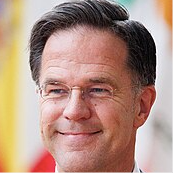
Secretary-General Mark Rutte said no NATO country could opt out of the new spending hike and that progress would be reviewed in four years. The target showed European willingness to respond to U.S. pressure, but it also highlighted disputes over Spain, over whether the U.S. itself should meet the target, and over whether spending pledges would translate into usable military capability.
US Withdrawal Threats
Senior administration officials told The New York Times in January 2019 that Trump privately said several times in 2018 that he wanted the U.S. to leave NATO.
A later New York Times report said allies and former U.S. officials feared Trump could seek a NATO exit in a second term, after years of public criticism and private discussions about withdrawal.
At a Feb. 10, 2024 rally in South Carolina, Trump said he had told a NATO leader the United States would not defend an underspending member and would encourage Russia to act against it. NATO's leader said those remarks could undermine alliance security and put U.S. and European forces at risk. These episodes shifted the debate from complaints about burden-sharing to the credibility of the Article 5 guarantee itself.
Congressional Guardrails and Legal Uncertainty
Congress responded by enacting Section 1250A of the FY2024 National Defense Authorization Act, which bars the use of funds for a U.S. withdrawal from the North Atlantic Treaty unless backed by Senate treaty consent or an act of Congress. CRS describes the provision as a separation-of-powers constraint on unilateral presidential withdrawal and notes that it raises unresolved constitutional questions about treaty termination.
The statute is a major safeguard but cannot compel a president to use military force or prevent a president from weakening NATO through non-cooperation, delayed decisions, or a posture sometimes called "quiet quitting." The legal debate therefore reduces the risk of formal withdrawal while leaving open the possibility that an administration could undermine NATO's practical credibility without formally leaving.
Force Reductions and Allied Contingency Planning
The withdrawal debate has also shifted from rhetoric to a posture of force because U.S. decisions about troops, enablers and NATO crisis forces affect deterrence even if the treaty remains in place. U.S. moves included withdrawing 5,000 troops from Germany, canceling 4,000 rotational troops to Poland, and dropping a long-range fires unit; credibility damage mattered more than the raw troop count.
Reuters reported in 2026 that the Trump administration planned to shrink U.S. forces and capabilities available to NATO in a European crisis under the NATO Force Model. The Wall Street Journal reported that Europe was accelerating a NATO fallback plan for greater European responsibility if Trump pulled the U.S. out or weakened its commitment. This is seen as a shift from burden sharing toward burden shifting, as Europeans try to preserve command structures, deterrence and nuclear credibility under a less reliable U.S. role.
Deterrence Credibility on the Eastern Flank
Eastern European and Baltic officials have treated U.S. ambiguity as a direct deterrence problem because their defense plans assume rapid allied reinforcement and U.S. high-end capabilities. The Guardian reported that in mid-May 2026 in Tallinn, U.S. Undersecretary Thomas DiNanno did not say U.S. troops would fight if Russia invaded the Baltic states when asked directly.
The Baltic states have sought to avoid public confrontation with Washington while increasing defense spending and buying time under continued U.S. protection. Reuters and CNN reported that Trump again raised the possibility of leaving NATO in April 2026 amid disputes over allied support for reopening the Strait of Hormuz.
European Perspective
European strategic autonomy became part of the European Union's foreign and security policy vocabulary following the publication of the EU Global Strategy in 2016.
The 2016 strategy nurtured the ambition that the EU should be able to act with greater independence in security and defense, while autonomy did not necessarily mean replacing NATO.
The concept remained contested because France often treated it as a route to reducing U.S. dependence, while many central, Nordic and Baltic states feared it could weaken the U.S. link they considered central to deterring Russia. Strategic autonomy was seen as a debate over political will, industrial capacity, institutional fragmentation and military capability rather than a single agreed doctrine.
PESCO, the European Defense Fund and Implementation Gaps
The EU established Permanent Structured Cooperation in December 2017, with 25 of the 27 EU member states, excluding the U.K., committing to it. By 2022, PESCO had reached 60 cooperative projects, and allocations had begun from the European Defence Fund's €7.9 billion budget for military research and development. IISS and ELN analysis of PESCO and the EDF shows that EU initiatives are increasingly practical but remain constrained by member-state sovereignty, third-country participation rules and unresolved EU-NATO division-of-labor questions.
France, Germany and the Eastern Threat Perception Divide
French President Emmanuel Macron used his September 2017 Sorbonne speech to call for a stronger European role in defense and strategic autonomy. French arguments for reduced U.S. dependency have often met skepticism from Germany, Poland and the Baltic states, especially when French outreach to Russia was seen as insufficiently attentive to eastern threat perceptions.
Politico reported that Macron defended engagement with Russian President Vladimir Putin during meetings with Lithuanian and Latvian leaders after Alexei Navalny's poisoning, while Baltic officials stressed that dialogue should produce concrete results rather than business as usual. Germany's Zeitenwende after Russia's full-scale invasion promised a major increase in defense spending, but it didn't produce rapid changes in capabilities. The Franco-German debate is therefore both conceptual and practical, linking autonomy rhetoric to procurement, readiness and the political difficulty of rearmament.
A European Pillar Inside NATO
Recent European debate has increasingly shifted from replacing NATO to building a stronger European pillar within NATO, as Europeans face an inescapable path toward mechanisms that allow them to defend themselves with less American support. In January 2026, NATO Secretary General Mark Rutte told MEPs that Europe could not defend itself without the U.S., prompting French and Spanish officials to argue that Europeans must take greater responsibility.
A European NATO would require command structures, intelligence, doctrine, industry and political will that Europe has not yet demonstrated. The European perspective is therefore not a single view but a spectrum between Atlanticist dependence, pragmatic EU-NATO complementarity and stronger European self-defense.
Further Enlargement and the Russia-Ukraine War
Russia's war with Ukraine in February 2022 changed the security calculations of Finland and Sweden, which applied for NATO membership less than three months later.
Finland's neutrality had roots in a postwar treaty with Moscow, while Sweden stayed outside NATO during the Cold War without subordinating its military policy to Moscow. This highlighted a rapid shift in public opinion and the perceived insufficiency of informal alignment with NATO as a security guarantee.
Sweden's decision and the May 2022 application were seen as ending 200 years of neutrality and military non-alignment. NATO's Nordic enlargement changed the Baltic Sea and Arctic security map by adding capable militaries and extending NATO's direct border with Russia.
Russia's Objections and Moscow's Threat Narrative
Russia has long framed NATO enlargement as a security threat. Putin first raised major complaints in his 2007 Munich Security Conference speech and later linked Crimea to concerns about NATO expansion. In late 2021, Russia massed tens of thousands of troops near Ukraine and sent draft treaty demands to the U.S. and NATO. Those demands included closing NATO's open door to new members and limiting further enlargement.
Bucharest and Ukraine's Unresolved Aspirant Status
At NATO's April 2008 Bucharest summit, allies declared that Ukraine and Georgia would become members but did not give them Membership Action Plans or a timetable. Reuters reported that the compromise papered over a divide between the U.S., which supported a path for both states, and France and Germany, which feared antagonizing Russia. Bucharest was seen as a rare alliance defeat for a U.S. priority because Washington did not secure MAP status for Ukraine and Georgia.
In December 2008, at least six European NATO members opposed a U.S.-backed formula to place Ukraine and Georgia on a slower path to NATO membership. The Bucharest formula therefore created an ambiguous promise: enough to alarm Moscow and encourage aspirants, but not enough to protect them under Article 5.
US-Europe Rift Over the Iran War
Trump has repeatedly voiced frustration with European allies for not backing the U.S.-Israel military campaign against Iran.
During a June 24 meeting with Rutte, Trump said he was disappointed with Italy, the U.K., Germany and France, calling Spain "a horror show." U.S. Secretary of State Marco Rubio separately claimed that Europe's refusal to allow use of military bases undermined the transatlantic alliance.
NATO's Defense of European Support
Rutte pushed back against Trump's criticism, citing specific logistical contributions. Rutte said "ally after ally" made bases available to the U.S. military, noting that roughly 4,000-5,000 U.S. planes took off from European bases over six weeks, including 500 flights from Italy alone, and that Romania cut commercial flights to store U.S. tankers.
The U.K.'s Keir Starmer allowed use of the Diego Garcia base only for defensive operations, while Spain and France refused to permit their airbases for military purposes. Italy's Defense Minister Guido Crosetto said Rutte had conflated authorized logistical flights with combat operations, insisting Rome only approved non-kinetic activity.
Allies Resist Strait of Hormuz Demands
European resistance extended to Trump's requests for naval help reopening the Strait of Hormuz after Iran blocked the waterway. Trump warned NATO would face a "very bad future" if members didn't help, prompting former Estonian President Toomas Hendrik Ilves to call the request "a bit rich" given Trump's past insults.
German Defense Minister Boris Pistorius stated, "This is not our war; we have not started it," while Macron said France would never join operations to free the strait. Trump ultimately reversed course, saying, "We don't need any help, actually."
Debate Over a NATO Without the U.S.
The tensions have fueled European discussion about reducing reliance on Washington. A study estimated European NATO members would need roughly a trillion additional dollars to compensate for reduced U.S. involvement.
Nick Witney of the European Council on Foreign Relations argued that Europe "just don't bloody well need America now," pointing to Macron's outreach to expand nuclear cooperation outside NATO. Estonian Foreign Minister Margus Tsahkna acknowledged citizens are questioning whether NATO's Article 5 guarantee still holds, urging Europe to stay calm while continuing dialogue with Washington. Rutte's Ankara summit visit aimed to ease these strains.
Outlook
NATO's outlook after 2024 is shaped by the intersection of Ukraine, U.S. domestic politics and European rearmament.
In February 2024, about 20 European leaders met in Paris to signal support for Ukraine amid ammunition shortages and doubts about future U.S. backing. NATO's 75th anniversary summit in Washington in July 2024 sought to lock in support for Ukraine and the alliance before a possible Trump return.
By the 2025 Hague summit, allies had pledged 5% of GDP for defense and related infrastructure, but it was unclear whether political spending targets would close capability gaps. The central question is no longer only whether Europe spends more, but whether it produces deployable forces, air defense, deep strike, intelligence, logistics and industrial capacity.
European Defense-Industrial Integration
European defense-industrial integration has become a core test of NATO's future because increases in spending can deepen dependence on U.S. suppliers if Europe does not expand its own production base. Without a European production plan, the Hague's spending pledges could deepen dependence on the U.S. while Washington shifts its attention to the Pacific. The post-Cold War transatlantic defense-industrial bargain is one in which Europe bought U.S. platforms for capability and political reassurance, a model now strained by industrial bottlenecks and U.S. political uncertainty.
Ukraine's Postwar Guarantees and NATO's Open Question
Ukraine's future security is one of NATO's most difficult unresolved issues because membership, neutrality and bilateral guarantees each carry different risks. At the July 2023 Vilnius summit, G7 leaders pledged long-term bilateral security commitments to Ukraine through its NATO membership, and more than two dozen countries later endorsed the framework.
U.S. Pivot, Trump Risk and European Fallback Plans
The long-term U.S. pivot toward the Indo-Pacific is now combined with uncertainty over U.S. commitment to Europe under Trump-aligned policy circles. Trump appointed Elbridge Colby and Alex Velez-Green to Pentagon policy posts, and both had argued for prioritizing China over Europe. Katherine Thompson told Congress the Defense Department was conducting a global force posture review and had made no decision on U.S. troop changes in Europe.
Overview




© 2026 Improve the News Foundation.
All rights reserved.
Version 7.4.1