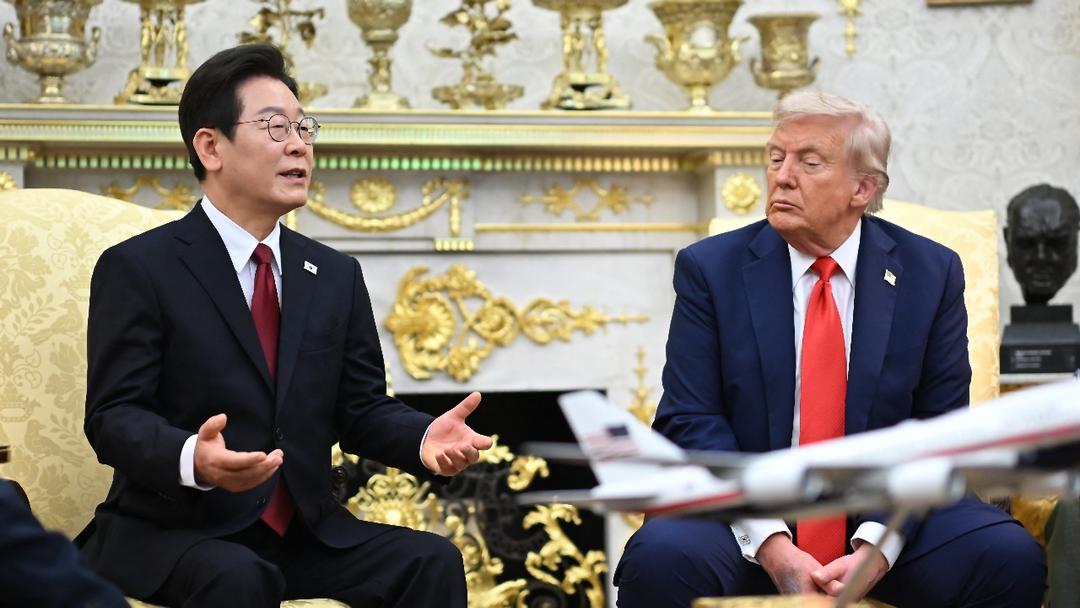
Trump Hosts South Korea's Lee at White House
Trump Hosts South Korea's Lee at White House
The Spin
Trump's willingness to engage Kim Jong Un represents pragmatic diplomacy that could bring stability to the Korean Peninsula. His personal relationship with the North Korean leader proved effective during his first term, preventing potential nuclear conflict. The president's direct approach and ability to build rapport with adversaries offers the best path forward for denuclearization talks.
The U.S.-South Korea alliance remains ironclad despite political transitions, with South Korea demonstrating unwavering commitment through massive investment pledges and continued security cooperation. Pragmatic leadership is crucial to strengthen ties and contribute to regional stability and American industrial revival. The partnership represents a cornerstone of Indo-Pacific security architecture that benefits both nations' strategic interests.
Lee's administration raises concerns about South Korea's democratic trajectory and commitment to the U.S. alliance. His leftist background, previous indictment for allegedly sending money to North Korea, and appointment of officials with anti-American histories suggest a fundamental shift away from traditional U.S.-South Korea cooperation. The persecution of former President Yoon mirrors authoritarian tactics.
Trump should not overlook fundamental American principles in exchange for trade deals and investment promises from a leader with questionable democratic credentials. Lee's administration shows concerning authoritarian tendencies through political persecution and electoral irregularities that undermine the alliance's democratic foundations. Prioritizing short-term gains over democratic values risks weakening the alliance's moral authority and long-term stability.
Metaculus Prediction
There's a 77% chance that South Korean President Lee Jae-myung will complete his full term, according to the Metaculus prediction community.
Public Figures



Go Deeper
© 2026 Improve the News Foundation.
All rights reserved.
Version 7.4.1